What is Intaglio? An In-Depth Look at the “White on Red” Art of Seal Engraving
When admiring a Chinese seal, have you ever been captivated by two distinctly different visual effects? One features striking, prominent red characters, while the other presents subtle, reserved white characters, akin to openwork carvings on red silk. The latter is the highly captivating intaglio technique in seal engraving. So, what is intaglio? What makes it unique? This article will take you on a deep dive into this “white on red” art of metal and stone.
I. The Definition of Intaglio: What Does “Yin” Mean?
Intaglio, also known as a “Baiwen Seal”, is a fundamental carving method in seal engraving. Its core characteristic is: The carving knife removes the character strokes from the seal’s surface, causing them to be recessed below the surface.
When the seal is inked with paste and stamped onto paper, the carved-away sections cannot hold the paste and thus leave no red mark, while the untouched, raised parts of the seal surface leave a red impression. The final result we see is white characters on a red background, hence the name “White Character Seal.”
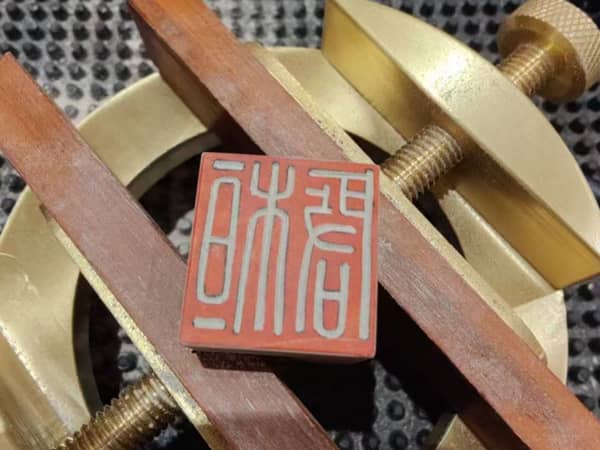
Simply put: Intaglio involves “carving away what you want to be blank.”
II. Core Artistic Characteristics of Intaglio
Now that we understand the definition of intaglio, let’s explore its artistic appeal:
- Solid, Archaic, and Steady Power: Because the character lines in intaglio are recessed, the stamped impressions often appear thicker and fuller than the original carving. This gives intaglio seals an overall visual feeling of solemnity, substance, and restrained power.
- A Rugged, Aged “Metal & Stone” Feel: During the carving process, the collision between the knife and the stone causes small fractures, creating natural, rough stroke edges. This “spirit of metal and stone” is particularly prominent in intaglio works, adding a sense of historical weathering and artistic spontaneity.
- Strong Visual Impact: The large area of red background contrasted with clear white characters creates high contrast, making intaglio seals highly conspicuous and eye-catching, whether on a piece of calligraphy/painting or displayed independently.
III. Intaglio vs. Relief Carving: A Clear Distinction
The best way to fully grasp what intaglio is is to compare it with its opposite—relief carving, or “Zhuwen Seals.”
| Feature | Intaglio | Relief Carving |
|---|---|---|
| Also Known As | Baiwen Seal (White Character Seal) | Zhuwen Seal (Red Character Seal) |
| Carving Method | Removing the character strokes | Preserving the character strokes, removing the blank areas |
| Final Effect | White characters on a red background | Red characters on a white background |
| Line Quality | Thick, solid, and robust strokes | Thin, delicate, and elegant strokes |
| Artistic Feel | Steady, austere, powerful | Refined, fluent, exquisite |
| Ink Paste Use | More material removed; uses less paste | Less material removed; uses more paste |
Simply put: In intaglio, the characters are recessed, stamping as white text. In relief carving, the characters are raised, stamping as red text.
IV. The Intaglio Process (Step-by-Step Breakdown)
Creating a fine intaglio seal typically follows these steps:
- Design the Draft: Design the layout of the seal characters in Zhuan script on paper. For intaglio, pay special attention to the spacing between strokes to prevent the characters from becoming blurred after carving due to connecting red backgrounds.
- Reverse Transfer: Copy the designed draft in reverse onto the seal surface by tracing or a water-transfer method. This is a crucial step to ensure the stamped characters appear correctly oriented.
- Applying Knife Techniques:
- The “Pushing Cut” (Chongdao): The knife corner enters the stone, and the knife is pushed forcefully along the line direction. This creates powerful, fluid lines.
- The “Chopping Cut” (Qiedao): The knife corner is rocked up and down into the stone in a series of small cuts to form a line. This creates vigorous, rugged lines full of texture, embodying the “metal and stone” spirit.
- In practice, masters often combine both techniques.
- Checking & Correction: During carving, periodically ink the seal to check progress. Make fine adjustments using the knife tip or sandpaper to repair broken strokes.
- Stamping Completion: Evenly apply high-quality ink paste and stamp firmly onto the paper with steady pressure. A complete intaglio work is thus born.
V. Common Applications of Intaglio
Intaglio art is widely used in:
- Name Seals: An intaglio name seal appears solemn and trustworthy, often used for signatures on calligraphy and paintings.
- Collection & Authentication Seals: Museums and collectors frequently use intaglio seals for their connotation of steadiness and substance.
- Leisure Seals: Intaglio leisure seals bearing idioms or mottos are stamped at the beginning or corners of artworks to balance composition and deepen the artistic conception.
- Official Seals: Historically, many official seals used intaglio carving to convey authority and solemnity.
Frequently Asked Questions (FAQ)
Q1: Should beginners start with intaglio or relief carving?
A: It’s generally recommended to start with intaglio. Because you are directly carving the strokes away, the process is more intuitive. It helps you quickly get a feel for the interaction between the knife and the stone and master basic knife control and force.
Q2: How to avoid broken strokes or a cracked seal surface when doing intaglio?
A: The key is controlling the force and angle of your knife. Use a lighter, steadier hand for fine strokes; slow down at curves. Choosing practice stones with uniform texture and moderate hardness, like Qingtian stone, can also help prevent these issues.
Q3: Can one seal use both intaglio and relief carving?
A: Absolutely! This style is called a “Zhu-Bai Combined Seal.” Through clever design, intaglio and relief carving are fused into a single seal, creating a dynamic interplay of solid and void, representing a superior technique in seal art.
Conclusion
Intaglio is far more than a simple carving technique; it is a philosophy concerning “negative space” and “letting go.” In chiseling away the stone, one also shapes the soul; in presenting white lines, one highlights the depth of the red foundation.
We hope this detailed explanation of “what is intaglio” helps you understand not only its technical aspects but also appreciate its deeper artistic charm. If you feel drawn to this art, why not pick up a carving knife and experience for yourself the joy of creating a universe upon a piece of metal or stone?